
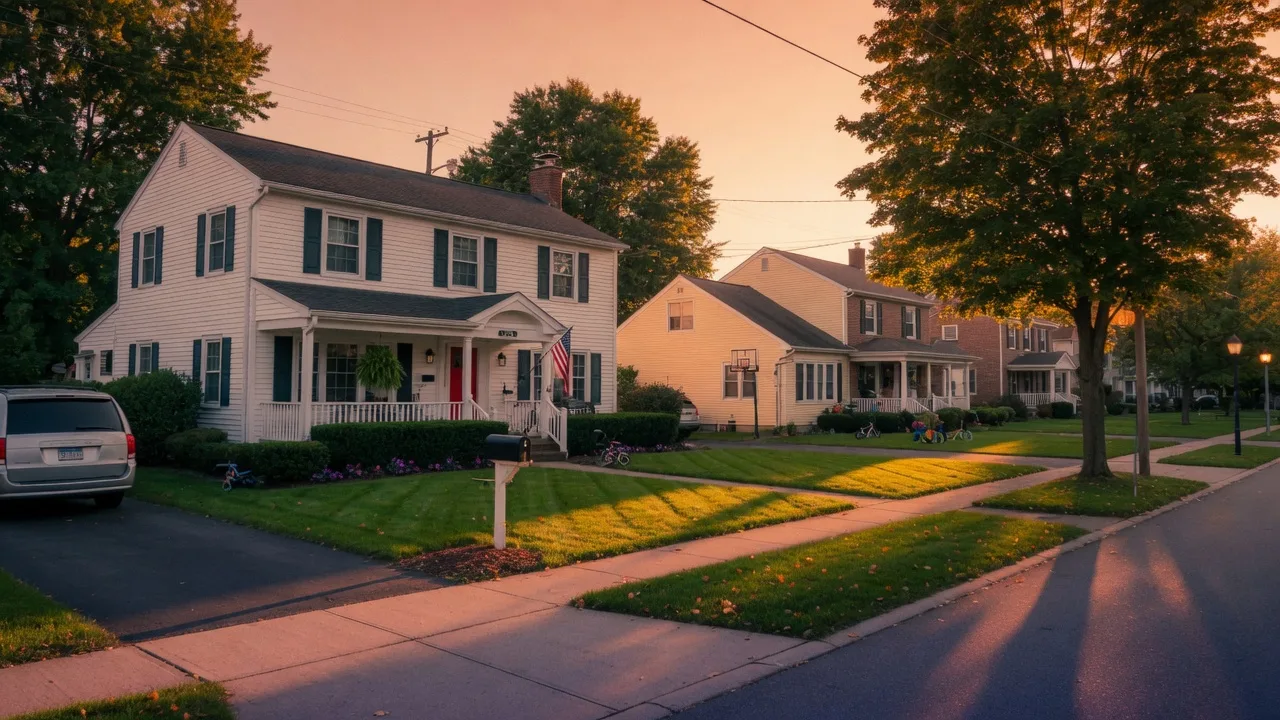
Grand Blanc, Fenton, Linden, Columbiaville, and Tyrone Township offer a compelling combination of affordable home prices, strong rental demand, and favorable Michigan landlord-tenant laws that make Genesee and Livingston counties attractive markets for real estate investors. Whether you are a first-time rental property buyer or an experienced investor expanding your portfolio, understanding the local market dynamics — from rental income potential to property management realities — is essential to making a sound investment.
In this guide, The Moen Group breaks down what investors need to know about rental real estate in Southeast Michigan, including verified rental income data, median home prices by community, the regulatory framework that governs Michigan landlords, and practical strategies for building wealth through residential rental properties.
Why Grand Blanc, Fenton & Linden Appeal to Real Estate Investors
Southeast Michigan's Genesee and Livingston counties have long attracted investors looking beyond the traditional coasts and Sun Belt markets. Several structural factors make the Grand Blanc, Fenton, and Linden area particularly attractive for residential rental investments in 2026:
- Affordable entry points. Median home sale prices in Genesee County remain well below national averages. In Grand Blanc, homes sell at a median around $280,000 to $310,000. In Fenton, the median is approximately $350,000. In Linden, the median sits near $335,000 to $340,000. These price points allow investors to acquire cash-flowing properties without the capital requirements of coastal markets.
- Steady rental demand. The region's mix of hospital systems, manufacturing employers, GM and supplier operations, and proximity to both Flint and the Detroit metro creates a broad tenant pool. Grand Blanc Township and Flint have accounted for roughly 35% of regional rental construction activity since 2020, reflecting sustained demand for rental housing (U.S. Department of Housing and Urban Development, Flint/Grand Blanc Comprehensive Housing Market Analysis, 2024).
- Strong school districts. Families relocating to the area consistently prioritize school quality, and the Grand Blanc, Fenton, and Linden communities are each served by established local districts. School quality directly supports rental demand and helps retain tenants long-term.
- No rent control. Michigan state law (M.C.L. § 123.409) prohibits rent control at the municipal level, giving landlords the flexibility to adjust rents to market rates. This is a significant advantage compared to states where local governments cap rent increases.
- Quality of life. Parks, lakes, trails, farmers markets, and a walkable downtown in Fenton make these communities attractive to tenants who want small-town living with easy highway access to I-75, I-69, and US-23.
Rental Market Snapshot: What Investors Can Expect
The rental market across these communities offers a range of price points depending on the property type, size, and location. Here is a snapshot of current rental income data drawn from multiple listing aggregators and market data sources:
| Community | Median Home Price | Average Rent | Rent Range |
|---|---|---|---|
| Grand Blanc | $280,000–$310,000 | $1,150–$1,400/mo | Studios from ~$820; 3BR homes $1,350–$1,600 |
| Fenton | ~$350,000 | $1,330–$1,510/mo | 3BR homes $1,490–$2,600; range up to $3,400 |
| Linden | $335,000–$340,000 | Limited data* | Fewer rental listings; small-town inventory |
| Columbiaville / Tyrone Twp. | $385,000–$415,000 | Limited data* | Rural lots; fewer conventional rentals |
*Linden, Columbiaville, and Tyrone Township have smaller rental markets with fewer publicly listed rental properties. Investors in these areas often work directly with a local agent to identify off-market opportunities. Rental data sources: Zumper, Rent.com, Apartments.com, RentCafe, and Zillow Rental Manager (2025–2026 data).
The statewide rental vacancy rate in Michigan stood at approximately 8.0% as of early 2025 (Federal Reserve Economic Data), while the Flint/Grand Blanc metropolitan area reported a tighter vacancy rate of roughly 6.3% in the most recent HUD analysis. A tighter vacancy rate in Grand Blanc suggests stronger tenant demand relative to available supply — a favorable condition for investors seeking reliable occupancy.
Understanding Your Returns: Cash Flow vs. Appreciation
Real estate investors typically evaluate properties on two axes: cash flow (monthly rental income minus all expenses) and appreciation (the growth in the property's market value over time). In the Grand Blanc, Fenton, and Linden market, both metrics deserve attention.
Cash Flow Potential
For a typical single-family home purchased at $300,000 in Grand Blanc with 20% down ($60,000), a 30-year mortgage at current rates near 6.5% to 7.0%, the monthly principal and interest payment lands around $1,520 to $1,575. Add property taxes (which vary by municipality but average $250 to $350 per month in this price range), insurance ($150 to $200 per month), and a reserve for maintenance and vacancy, and your total monthly carrying cost is approximately $2,100 to $2,300.
With average rents of $1,150 to $1,400 for a three-bedroom home in Grand Blanc, an investor buying at full price with conventional financing may find that cash flow is modest or break-even in the first few years. This is common in stable, school-district-driven markets where the return is built more through principal paydown, tax advantages, and long-term appreciation than through outsized monthly cash flow.
Investors who can put down more than 20% — or who purchase with cash — see significantly stronger cash flow. A cash purchase at $300,000 with rent at $1,350 per month and expenses of $550 to $650 per month (taxes, insurance, maintenance reserves) yields an estimated gross return of 5.4% before accounting for vacancy, management fees, or capital expenditures.
Appreciation Trends
Genesee County home prices increased approximately 3.5% to 3.8% year-over-year through mid-2025, according to market data from Redfin and Rocket Homes. While that pace represents a moderation from the sharp post-pandemic gains of 2021–2023, it reflects a healthier, more sustainable trajectory. For investors, consistent appreciation of 3% to 4% annually compounds meaningfully over a five- to ten-year hold — particularly when combined with tenant-paid mortgage paydown.
In Livingston County, where Tyrone Township sits, appreciation has generally tracked slightly higher due to the county's stronger median household incomes and limited new inventory in established neighborhoods.
Michigan Landlord-Tenant Laws: What Every Investor Must Know
Michigan's landlord-tenant laws are among the most investor-friendly in the Midwest. Understanding the key provisions helps you operate legally, protect your investment, and maintain positive tenant relationships.
Security Deposits
Michigan law caps security deposits at 1.5 months' rent (M.C.L. § 554.602). Landlords must hold the deposit in a regulated financial institution or post a cash or surety bond. After a tenant moves out, you have 30 days to return the balance due along with an itemized written statement of any deductions. Michigan does not require landlords to pay interest on security deposits.
Lease Termination and Notice Requirements
- Month-to-month tenancies: Either party may terminate with 30 days' written notice (M.C.L. § 554.134).
- Non-payment of rent: Landlords must serve a 7-Day Notice to Quit before filing for eviction. This notice gives the tenant seven days to pay or vacate.
- Lease violations: The standard approach is a 7-day notice to cure the violation, followed by termination if the tenant fails to comply.
- Landlord entry: Reasonable notice — commonly interpreted as 24 hours — is required for non-emergency access.
The Eviction Process
Michigan follows the Summary Proceedings Act (M.C.L. § 600.5701 et seq.) for evictions. The process works as follows:
- Serve the appropriate written notice (7-day for non-payment, 30-day for month-to-month termination).
- If the tenant does not comply, file a court action and serve a Rule for Possession at least 3 days before the hearing.
- Attend a court hearing. In uncontested cases, this typically takes 21 to 45 days from initial notice. Contested cases may take 45 to 120 days.
- If the court rules in your favor, a writ of restitution is issued. A 10-day appeal period follows.
- Only the county sheriff may physically remove a tenant. Self-help evictions — lockouts, utility shutoffs, or removing belongings — are illegal under Michigan law.
Key point: Always follow proper legal procedures. A mistake in the notice process can reset the eviction timeline and cost you weeks or months. Working with a real estate attorney who handles landlord-tenant matters in Genesee or Livingston County is a worthwhile investment.
Rent Control
Michigan has prohibited municipal rent control since 1988 (M.C.L. § 123.409). This means landlords in Grand Blanc, Fenton, Linden, and all other Michigan communities have the legal right to set and adjust rents to market rates without government-imposed caps. While this does not guarantee tenants will accept large increases, it gives investors the flexibility to keep pace with inflation, rising costs, and market conditions.
Community-by-Community Investment Profile
Each community in our service area presents a distinct investment profile. Here is how they compare:
Grand Blanc
The strongest rental demand in the area, driven by the school district, proximity to I-75 and I-69, and a large base of young families and healthcare workers. Median rents of $1,150 to $1,400 per month support moderate cash flow. Inventory of single-family rentals is competitive — good for landlords seeking reliable tenants. Grand Blanc Community Schools serve over 7,500 students, making the area a steady choice for family renters.
Fenton
Fenton offers a blend of small-town charm and rental diversity. The downtown area attracts both long-term renters and short-term or seasonal tenants near Lake Fenton. Average rents range from $1,330 to $1,510 per month, with three-bedroom homes commanding $1,490 to $2,600 depending on location and condition. The Fenton Community & Cultural Center, Rackham Park, and the weekly farmers market make Fenton attractive to quality tenants. Median home prices around $350,000 require careful deal analysis, but the premium rent potential in the Lake Fenton corridor can offset higher acquisition costs.
Linden
Linden's smaller rental inventory creates both scarcity and opportunity. With fewer rental properties on the market, well-maintained homes in Linden tend to attract tenants quickly. The community's proximity to Byram Lake and Clover Beach, combined with Linden Community Schools and a quiet downtown, appeal to families seeking a smaller-town environment. Investors should expect a more limited resale market but benefit from lower vacancy among well-positioned properties.
Columbiaville & Tyrone Township
These communities in Lapeer and Livingston counties offer a rural investment profile. Larger lots, proximity to Holloway Reservoir, and access to Tyrone Township's new construction opportunities (including the Oaks of Tyrone luxury community by Big Sky Development) create niche investment potential. However, buyers should account for well and septic systems, which require periodic maintenance and add to operating costs. These areas are better suited for investors comfortable managing rural properties with longer tenant retention cycles.
Tax Advantages for Michigan Rental Property Investors
One of the most compelling reasons to invest in residential rental property is the tax treatment. Michigan and federal tax codes offer several advantages that improve your effective return:
- Depreciation. The IRS allows you to depreciate the improvement value of a rental property (not the land) over 27.5 years. For a $300,000 home where the land is valued at $75,000, you can deduct approximately $8,182 per year — a non-cash expense that reduces your taxable rental income.
- Mortgage interest deduction. Interest paid on your investment property mortgage is fully deductible against rental income, which is especially valuable in the early years of a loan when most of your payment goes to interest.
- Operating expense deductions. Property taxes, insurance, maintenance, management fees, travel to the property, and professional services (accountants, attorneys) are all deductible.
- Michigan's property tax treatment. Rental properties in Michigan are assessed at the same millage rate as owner-occupied homes, but you are not eligible for the Principal Residence Exemption (PRE). This means you will pay the full non-exempt millage rate. In Grand Blanc Township, for example, the total millage for non-homestead properties is significantly higher than the homestead rate, so factor this into your cash flow projections.
- 1031 Exchange. When you sell a rental property, you can defer capital gains taxes by reinvesting the proceeds into a like-kind property through a Section 1031 exchange — a powerful tool for building and scaling a portfolio over time.
Important: Tax rules are complex and change frequently. Consult with a CPA or tax advisor who specializes in real estate investment before making purchasing decisions based on tax benefits. For a deeper look at the investment property market in our area, visit our investment properties page or contact Rob Moen for personalized investment advice.
Practical Tips for First-Time Rental Investors
If you are considering your first investment property in the Grand Blanc, Fenton, or Linden area, here are some actionable guidelines from The Moen Group:
- Run the numbers conservatively. Assume 8% to 10% vacancy, budget 1% of the property value annually for maintenance, and include property management fees (8% to 10% of gross rent) even if you plan to self-manage at first. If the deal does not work at these conservative assumptions, it does not work.
- Target the 1% rule as a benchmark. While not always achievable in appreciating markets, the 1% rule suggests that monthly rent should be at least 1% of the purchase price. A $300,000 property renting for $1,350 per month falls short of this benchmark at 0.45%, which is typical for stable Midwest markets — but the tax benefits and appreciation can still make the investment attractive.
- Screen tenants thoroughly. Use a consistent tenant screening process that includes credit checks, criminal background checks, employment verification, and rental history references. Michigan law allows you to charge a reasonable application fee to cover screening costs.
- Understand your insurance needs. Standard homeowner's insurance does not cover rental activity. You need a landlord insurance policy (also called a dwelling fire or DP-3 policy) that covers liability, loss of rent, and property damage. Landlord policies in Michigan typically cost 15% to 25% more than owner-occupied homeowner's policies.
- Consider a local property manager. If you do not live near your investment property — or even if you do — a professional property manager can handle tenant placement, rent collection, maintenance coordination, and lease enforcement. Expect to pay 8% to 10% of gross monthly rent plus a tenant placement fee (typically 50% to 100% of the first month's rent).
- Start with single-family homes. For most first-time investors, a single-family home is the simplest and least risky entry point. The tenant pool is larger, maintenance is more predictable, and resale options are broader compared to multi-family properties.
How The Moen Group Helps Investors
Investment real estate requires a different skill set than owner-occupied purchases. At The Moen Group, we bring decades of experience in the Genesee and Livingston County markets and a deep understanding of what makes a rental property successful in our area. We help investors:
- Identify properties with strong rental income potential based on verified local rent data.
- Analyze cash flow projections using realistic assumptions for taxes, insurance, vacancy, and maintenance.
- Navigate Michigan's landlord-tenant laws and connect with local property management resources.
- Evaluate both on-market and off-market opportunities across Grand Blanc, Fenton, Linden, Columbiaville, and Tyrone Township.
- Build long-term wealth through strategic acquisition and portfolio growth.
Whether you are purchasing your first rental home or expanding an existing portfolio, we are here to help you make informed, data-driven decisions. Contact us today for a personalized investment consultation.
Frequently Asked Questions
Is Grand Blanc a good market for rental property investment?
Yes — Grand Blanc offers strong rental demand driven by its top-50 statewide school district, proximity to major highways, and a large base of families and healthcare workers. Median rents of $1,150 to $1,400 per month, combined with home prices in the $280,000 to $310,000 range and a regional vacancy rate of approximately 6.3%, make it a competitive but rewarding market for patient investors.
How much can I expect to earn as a landlord in Fenton or Linden?
Average rents in Fenton range from $1,330 to $1,510 per month across all property types, with three-bedroom single-family homes commanding $1,490 to $2,600. Linden has fewer publicly listed rental properties, but well-maintained homes in the community tend to lease quickly due to limited inventory. Your actual income depends on the property's condition, location, and the quality of your tenant screening process.
Does Michigan have rent control?
No. Michigan state law (M.C.L. § 123.409) prohibits rent control at the municipal level. Landlords in Grand Blanc, Fenton, Linden, and all other Michigan communities have the legal right to set and adjust rents to market rates. This is a significant advantage for investors compared to states where local governments restrict rent increases.
What are Michigan's rules on security deposits?
Michigan caps security deposits at 1.5 months' rent (M.C.L. § 554.602). Landlords must hold the deposit in a regulated financial institution and return any balance due — with an itemized statement — within 30 days of the tenant moving out. Michigan does not require landlords to pay interest on security deposits.
Should I hire a property manager for my rental in Grand Blanc?
It depends on your situation. If you live locally, have experience with tenant management, and can respond to maintenance issues promptly, self-management can save you 8% to 10% of gross rent. However, if you live out of area, have a full-time job, or simply prefer a hands-off approach, a professional property manager handles tenant placement, rent collection, maintenance coordination, and lease enforcement — allowing you to benefit from the investment without the day-to-day responsibilities. Most local managers charge 8% to 10% of monthly rent plus a placement fee.
Related Services

Rob Moen
Rob is the licensed Principal Broker for Keller Williams First and Team Leader of The Moen Group. With over three decades of real estate leadership and deep expertise in the Genesee and Livingston County markets, Rob helps investors identify opportunities, analyze deals, and build lasting wealth through residential real estate.