
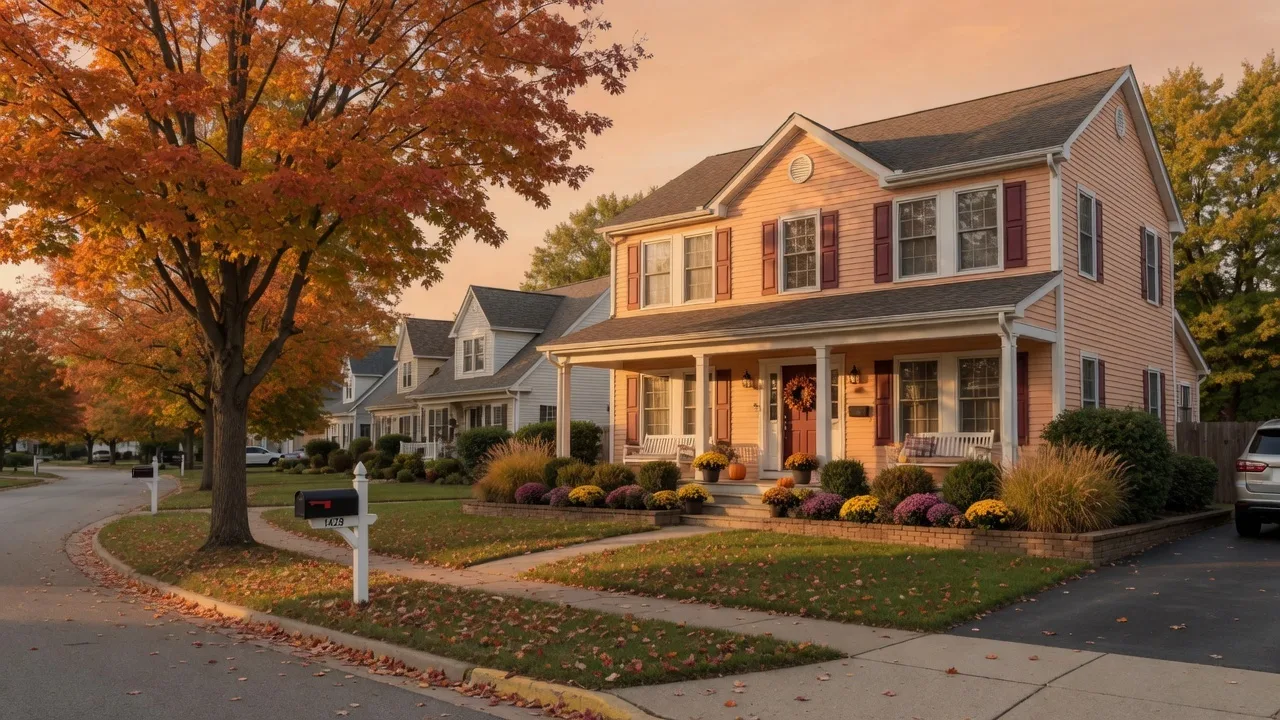
If you own a home in Grand Blanc, Fenton, Linden, Columbiaville, or Tyrone Township, you have likely noticed something uncomfortable in your mailbox this year: a homeowners insurance renewal premium that is significantly higher than what you paid 12 or 24 months ago. You are not imagining it. Michigan homeowners insurance rates surged by an average of 57% between November 2024 and November 2025, according to Bankrate's analysis of Quadrant Information Services data — one of the steepest single-year increases in the nation. Over a two-year span, premiums have climbed roughly 21%, adding an average of $244 per year to the typical Michigan homeowner's bill.
For homeowners and buyers in the Southern Lakes region, understanding what is driving these increases, how local factors shape your specific costs, and what practical steps you can take to protect your budget is not optional — it is essential. This guide breaks down the data, explains the local context, and provides a clear action plan.
How Much Are Michigan Homeowners Paying in 2026?
According to Bankrate's 2026 analysis, the average annual homeowners insurance premium in Michigan is $2,368 for a standard policy with $300,000 in dwelling coverage, a $1,000 deductible, and $100,000 in liability protection. That figure places Michigan above the national average and reflects the cumulative impact of multiple cost pressures hitting the state's insurance market simultaneously.
But averages tell only part of the story. Your actual premium depends on your home's age, construction type, roof condition, claims history, credit score, and — critically — where you live. In the Southern Lakes region, rates vary significantly between communities, and understanding those differences can save you hundreds of dollars per year.
Local Costs: Grand Blanc, Fenton, Linden, Columbiaville & Tyrone Township
Homeowners insurance premiums in the Southern Lakes corridor range widely depending on the community, property characteristics, and coverage level. Here is what the available data shows for each area:
| Community | Est. Annual Premium Range | Key Factors |
|---|---|---|
| Grand Blanc | $1,800 – $2,500+ | Tornado history (Feb 2024 EF-2); mix of ages and construction types |
| Fenton | $1,700 – $2,400+ | Lake-adjacent flood exposure; strong school district drives higher home values |
| Linden | $1,600 – $2,200+ | Mixed housing stock; some well/septic properties; generally favorable risk profile |
| Columbiaville | $1,500 – $2,100+ | Rural setting; well/septic common; Holloway Reservoir proximity |
| Tyrone Township | $1,800 – $2,800+ | Higher home values; newer construction; larger lot sizes increase dwelling coverage needs |
Ranges are estimated based on Bankrate, TrustedChoice, vhomeinsurance.com, and SmartFinancial data for standard policies with $300,000 dwelling coverage. Actual premiums vary by property, coverage selection, and insurer. Genesee County rates run approximately 5% above the state average; Livingston County rates tend to be lower.
Several local factors explain why rates differ across these communities. Grand Blanc's February 2024 EF-2 tornado — which produced 115 mph winds and traveled 5.7 miles through the community — put the area squarely on insurers' severe weather radar. Fenton's proximity to Lake Fenton and Silver Lake creates flood exposure for some properties. Tyrone Township's higher home values and newer construction drive up dwelling coverage requirements. And in Columbiaville and rural Linden, well and septic systems can affect underwriting decisions.
Why Are Rates Surging? Four Factors Driving Michigan's Insurance Crisis
1. Severe Weather Is Becoming More Frequent and More Expensive
Michigan has experienced a measurable uptick in severe weather events over the past several years. In 2025 alone, at least 12 tornadoes touched down across Lower Michigan in a single overnight event in May, including an EF-1 tornado near Gregory in Livingston County. Grand Blanc's EF-2 tornado in February 2024 was part of a broader pattern of increasing storm activity in the Great Lakes region. According to the Insurance Alliance of Michigan and state data, weather-related claims have been a primary driver of premium increases across the state.
For the Southern Lakes region specifically, the combination of tornado risk, severe thunderstorm damage, and occasional flooding means insurers price local policies to account for a higher-than-average claims probability. Communities like Grand Blanc, which experienced a direct tornado hit, may see more pronounced rate effects in the years following the event.
2. Construction Cost Inflation Is Driving Up Rebuild Expenses
The cost to rebuild a home after a total loss has risen sharply since 2021. Building materials — particularly lumber, roofing, and concrete — have experienced significant price volatility, and skilled labor costs in Michigan continue to climb. When the replacement cost of a home increases, the insurance coverage required to rebuild it must increase as well, and premiums follow.
For homeowners in Tyrone Township and Fenton with larger or custom-built homes, this factor hits hardest. A $500,000 custom home that cost $450,000 to rebuild in 2021 may now require $525,000 or more in dwelling coverage — and the premium adjusts accordingly.
3. Reinsurance Costs Are Being Passed Through to Consumers
Insurance companies buy their own insurance — called reinsurance — to protect against catastrophic losses. Global reinsurance prices have risen substantially, and carriers pass those costs directly to policyholders through higher premiums. This is an industry-wide dynamic that affects every Michigan homeowner, regardless of location or claims history.
4. Claims Frequency and Severity Are Both Rising
It is not just that individual claims are more expensive — there are more of them. Michigan's mix of older housing stock, severe weather exposure, and water damage risk creates a claims environment that keeps actuaries cautious. When an insurance company's combined ratio (the percentage of premiums paid out in claims and expenses) exceeds 100%, they raise rates to restore profitability. Michigan's market has been in this cycle for several years.
How Genesee County and Livingston County Compare
One of the most useful things homeowners in the Southern Lakes region can understand is that county-level differences matter. Genesee County and Livingston County — the two counties that encompass all five of our target communities — have meaningfully different insurance risk profiles.
According to available data, Genesee County homeowners pay approximately 5% above the state average, with Flint-area premiums averaging around $2,170 per year for standard coverage. Higher population density, older housing stock, and the county's tornado and severe storm history all contribute to this premium.
Livingston County homeowners tend to pay lower premiums, with some analyses showing average rates well below $2,000 per year. The county's newer housing stock, lower population density, and generally favorable risk profile all contribute to more competitive pricing.
What this means practically: a similar home in Tyrone Township (Livingston County) and Grand Blanc (Genesee County) may carry different insurance costs even if the home values and construction are comparable. For buyers evaluating homes across county lines, insurance cost is a legitimate factor in your total monthly housing budget — and one that is worth discussing with your insurance agent before you make an offer.
What About Flood Insurance?
Standard homeowners insurance does not cover flood damage. For homeowners near Lake Fenton, Silver Lake, Holloway Reservoir, or the Flint River, flood insurance may be a separate consideration — and one that has become more expensive and more complex in recent years.
FEMA's Risk Rating 2.0 methodology, which replaced the older flood zone mapping system, prices flood insurance based on individual property characteristics rather than broad zone designations. This means two homes on the same street can have very different flood insurance premiums depending on elevation, distance to water, and flood history.
For homeowners in Fenton Township's lake communities, Tyrone Township properties near creeks or low-lying areas, and any Columbiaville home near Holloway Reservoir, a flood insurance consultation is worth the investment. Your mortgage lender may require it, but even if they do not, the peace of mind — and the protection of your investment — is worth evaluating.
10 Practical Steps to Lower Your Michigan Homeowners Insurance Premium
The rate increases are real, but homeowners are not powerless. The Michigan Department of Insurance and Financial Services (DIFS) and independent insurance professionals recommend several strategies that can meaningfully reduce your annual cost:
1. Shop Around Every 2–3 Years
Premiums can vary by $1,000 or more per year for identical coverage between different insurers. Get quotes from at least three to five carriers — including both national brands and Michigan-based mutual companies — every time your policy renews. The insurer that was cheapest three years ago may not be the cheapest today.
2. Increase Your Deductible
Raising your deductible from $1,000 to $2,500 can reduce your premium by 10% to 20%. If you have an emergency fund that can cover the higher out-of-pocket cost, this is one of the most effective ways to lower your annual bill. Some insurers offer even larger discounts at $5,000 deductibles.
3. Bundle Your Home and Auto Policies
Insurers consistently offer their deepest discounts to customers who bundle multiple policies. Combining your homeowners and auto insurance with the same carrier typically saves 10% to 25% on both policies. For a Grand Blanc homeowner paying $2,300 for home insurance and $1,800 for auto, bundling could save $400 to $1,000 per year.
4. Invest in a New Roof
Your roof's age and condition are among the most influential factors in your premium. A roof that is 15 to 20 years old may trigger higher rates or even coverage restrictions. If you are planning a roof replacement, the insurance savings alone can offset a meaningful portion of the investment — and a new architectural shingle roof also adds significant resale value.
5. Install a Monitored Security System
A professionally monitored security system with smoke detection, water leak sensors, and intrusion alarms can earn discounts of 5% to 15% from most Michigan insurers. Smart home devices — particularly water leak detectors — are increasingly valuable given the frequency of water damage claims.
6. Ask Your Agent to Audit Your Policy
Most homeowners never review their policy details after the initial purchase. A good insurance agent will conduct an annual audit that identifies available discounts you may be missing — new roof discounts, claims-free discounts, professional association discounts, and loyalty credits that automatically apply after several years with the same carrier.
7. Maintain Good Credit
Michigan allows insurers to use credit-based insurance scores when setting premiums. Homeowners with excellent credit can pay significantly less than those with fair or poor credit for the same coverage. Paying bills on time, reducing outstanding debt, and monitoring your credit report are all indirect ways to keep your insurance costs down.
8. Review Your Coverage Limits Annually
Over-insuring is as costly as under-insuring. If your home's market value has appreciated significantly but your replacement cost hasn't changed proportionally, you may be carrying more dwelling coverage than you need. Conversely, if construction costs have risen, you may be underinsured — a risk that surfaces only when you file a claim.
9. Avoid Filing Small Claims
Every claim you file — even a small one — goes on your CLUE (Comprehensive Loss Underwriting Exchange) report and can affect your premium for up to seven years. For damage under $2,000 to $3,000, paying out of pocket may be smarter than filing a claim that triggers a rate increase costing you more over time.
10. Consider Michigan's FAIR Plan as a Last Resort
If you are unable to obtain coverage in the private market — due to claims history, property condition, or high-risk location — Michigan's FAIR (Fair Access to Insurance Requirements) Plan provides a baseline property insurance option. The Michigan DIFS website has details on eligibility and application processes. It is not the cheapest option, but it ensures you can always maintain the coverage your mortgage requires.
Special Considerations for Southern Lakes Homeowners
Beyond the statewide trends, homeowners in the Grand Blanc, Fenton, Linden, Columbiaville, and Tyrone Township corridor face several location-specific insurance considerations:
Well and Septic Systems
Many homes in rural Columbiaville, Tyrone Township, and parts of Linden rely on private wells and septic systems rather than municipal water and sewer. While these systems do not directly affect your homeowners insurance premium in most cases, they can affect your home's insurability if the septic system fails or the well becomes contaminated. Some insurers ask about septic age and condition during underwriting, and a failing system may require remediation before a policy is issued or renewed.
Lake and Waterfront Properties
Homes on or near Lake Fenton, Silver Lake, and other water features in the corridor may require additional coverage — not just for flood, but for water backup, sewer overflow, and岸线 erosion. Lake Fenton homes, in particular, carry higher dwelling values and correspondingly higher insurance requirements. If you are buying a waterfront property, discuss these specific risks with your insurance agent before closing.
New Construction Advantages
Buyers purchasing new construction homes in Tyrone Township, Fenton Township, or Linden may qualify for significantly lower insurance premiums. New homes feature modern building materials, updated electrical and plumbing systems, current building code compliance, and new roofs — all factors that reduce insurer risk. A new construction home can carry insurance costs 20% to 30% lower than an equivalent older home, making the total cost of ownership more competitive than the sticker price alone suggests.
What This Means for Buyers in 2026
If you are purchasing a home in Grand Blanc, Fenton, Linden, Columbiaville, or Tyrone Township this year, insurance cost should be part of your budgeting conversation from day one. A home that seems affordable at its list price may carry insurance costs that add $150 to $250 or more per month to your total housing expense — and that figure can differ substantially between properties, even in the same neighborhood.
Before making an offer, ask your real estate agent to help you estimate insurance costs for the specific property. Key factors that will affect your quote include:
- Roof age and material — a new architectural shingle roof vs. a 20-year-old three-tab roof can mean a 15% premium difference
- Home age and construction type — newer homes with modern wiring, plumbing, and 92%+ EFI HVAC are cheaper to insure
- Distance to fire station and fire hydrant — rural properties farther from fire protection may pay more
- Flood zone designation — properties in or near FEMA-designated flood zones may require separate flood insurance
- Claims history of the property — a home with recent water or wind damage claims may carry higher premiums
The Bottom Line: Insurance Is Part of Your Home's Value
Michigan's homeowners insurance market is in a period of significant adjustment. The 57% single-year increase is driven by real, structural factors — severe weather, construction costs, reinsurance pricing, and claims frequency — that are unlikely to reverse quickly. But homeowners who understand the market, shop strategically, and take proactive steps to reduce their risk profile can meaningfully lower their costs.
For homeowners in Grand Blanc, Fenton, Linden, Columbiaville, and Tyrone Township, the good news is that your communities continue to demonstrate strong fundamentals — quality schools, infrastructure investment, and sustained property value appreciation — that make the total cost of homeownership a worthwhile investment. Insurance is one piece of that equation, and managing it intelligently is part of protecting the asset you have built.
At The Moen Group, we believe that informed homeowners make better decisions — whether they are buying, selling, or simply maintaining their investment. Principal Broker Rob Moen and our full team of professionals understand the total cost of homeownership in these communities, from property taxes to insurance to maintenance, and we are here to help you navigate every aspect of it.
Contact us today for a personalized consultation on buying, selling, or understanding the true cost of homeownership in the Southern Lakes region.
Related Services

Rob Moen
Rob is the licensed Principal Broker for Keller Williams First and Team Leader of The Moen Group. Over three decades of real estate leadership makes him deeply knowledgeable about Michigan's local markets and communities.