
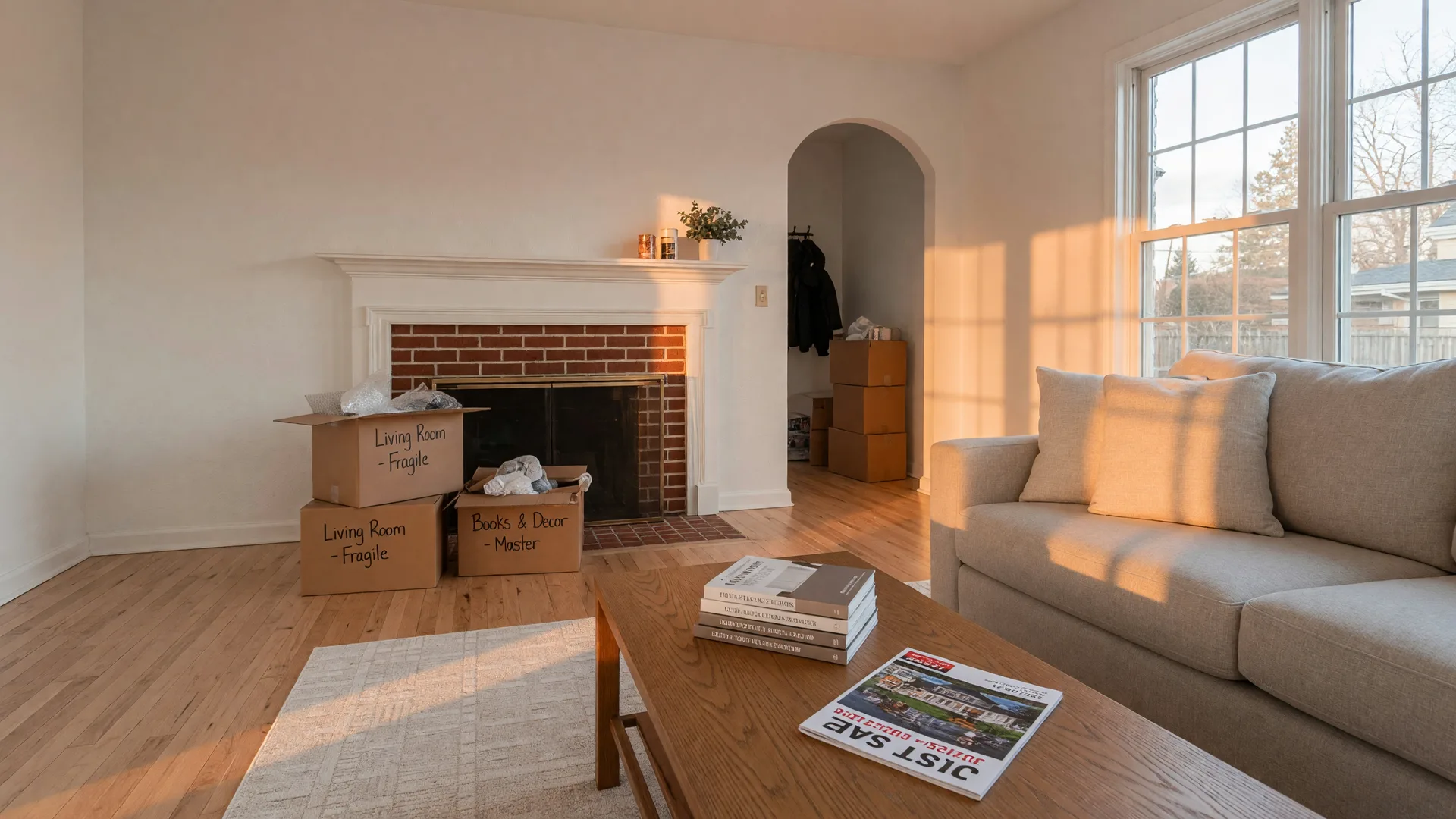
If you are reading this, you are probably in one of the most common and most stressful positions in real estate: your current home no longer fits, and the home you really want is out there somewhere in Genesee, Lapeer, or Livingston County. You need to sell, and you need to buy, and the two moves are tangled together. The good news is that thousands of Michigan homeowners navigate this exact situation every year, and it works out well when the process is sequenced properly.
The challenge is real. Offers on your current home can be contingent on finding a replacement. Offers on your next home can be contingent on selling the one you are in. Bridge financing exists to help cover the gap between the two closings, and sale-and-leaseback arrangements can keep you in your current home after closing while you finalize the purchase. These are all tools that experienced agents use every day, and none of them require you to figure it out alone. Contact Rob Moen, Principal Broker at Keller Williams First, or call 810-691-0019 to talk through your specific situation.
This guide walks through the practical side of selling your current home while searching for a larger one: how to prepare your home to sell for the most it can bring, why you should get listing-ready before you seriously shop, how to time the two transactions, and what to prioritize when you start touring homes in Grand Blanc, Fenton, Linden, Lapeer, Davison, and the surrounding communities we serve.
Step 1: Prepare Your Current Home to Sell for Top Dollar
The first move is not finding your next home. It is making your current home as attractive as possible to the buyers who will be touring it. In recent months, inventory across Michigan has grown and homes have taken slightly longer to sell than they did a year ago, which means buyers have more choices. The homes that stand out are the ones that feel move-in ready, and that feeling is built on a handful of high-impact preparations rather than a long list of expensive renovations.
Here is where to put your time and money before listing:
- Declutter room by room. Buyers need to picture their own furniture and their own life in your home. Pack away personal photos, collections, and anything that makes a room feel like yours instead of theirs. This is also the moment to box up items you will not need before the move, which gets a head start on packing.
- Deprioritize cosmetic work that will not return its cost. That full kitchen remodel you have dreamed about will rarely pay for itself before a sale. Focus instead on what buyers actually see and judge: fresh paint in neutral tones, clean carpets, polished hardware, and light fixtures that work and look current.
- Handle the minor repairs buyers notice. Dripping faucets, squeaky doors, cracked caulk, a missing outlet cover, a stained ceiling from an old leak. Small defects make buyers wonder what larger problems are hiding. A few hundred dollars in minor repairs removes those doubts.
- Maximize curb appeal. The front of your home is the first impression and the last one. Mow, edge, and weed. Refresh the mulch. Paint the front door. Make sure the house number is visible and the entry light works. In fall, keep the lawn raked and add simple seasonal touches like mums by the porch.
- Invest in professional photography. The overwhelming majority of buyers start their search online, and listing photos are the first thing they see. Professional photography, and in many cases a walkthrough video or 3D tour, is one of the highest-return investments you can make as a seller.
- Stage the rooms that matter most. You do not need to rent furniture for every room. Focus on the living room, the primary suite, and the kitchen. Remove excess furniture to make rooms feel larger, add neutral textiles, and let natural light in. A staged home consistently photographs better and sells faster than an empty or cluttered one.
Step 2: Get Listing-Ready Before You Seriously Shop
The biggest mistake homeowners make in a sell-and-buy move is starting the house hunt before their current home is ready to list. It is easy to see why: the search is the exciting part, and preparation feels like a chore. But the order matters, and here is the practical reason.
Once your home is listed, showings can happen on short notice. Buyers want to see homes at 5:30 on a Tuesday, on a Saturday morning, or during your family's dinner hour. If you are also driving across Genesee County to tour open houses at the same time, you will be canceling showings, rushing home to tidy up, and negotiating with your own agent about scheduling conflicts. That juggling act hurts both transactions. A home that is hard to show gets fewer offers, and a buyer search that is constantly interrupted by showing emergencies leads to rushed decisions on the most important purchase of your life.
Instead, do the prep work first. Declutter, repair, stage, photograph, and list your home. Establish a showing routine that works for your household, whether that means a cleaning checklist, a lockbox, or a plan for pets. Once your home is listed and the showing rhythm is established, you can shop with a clear calendar and a clear head, and you will be negotiating from a position of strength because you already know what your current home will bring.
This is also the point where a good agent earns their keep. Your listing agent should be handling the showings, the feedback, and the marketing so that you can focus on the search side of the equation. When one team guides both sides of your move, the coordination is seamless by design.
Step 3: Sequence Your Timing: List, Offer, and Negotiate in the Right Order
Timing is the heart of the sell-and-buy puzzle, and there is no single right answer for every household. The right sequence depends on your local market, your equity, your budget, and your tolerance for risk. Here is how the common approaches work in plain language.
List first, then shop. This is the most common and the least stressful sequence. Your home goes on the market, you accept an offer with a closing date that works for you, and then you search for your next home with a firm budget and a known timeline. If your offer on the next home is contingent on the sale of your current one, that contingency is easy to satisfy because the sale is already under contract. Buyers in Genesee, Lapeer, and Livingston counties today expect sellers to be realistic about timing, and a home that is already under contract is a strong negotiating position.
Shop with a pre-approval, then list. Some buyers prefer to find the home first and then list their current one. This works when you are comfortable carrying both properties for a short period, or when you can use bridge financing to cover the down payment on the new home before your current one closes. Bridge financing is a short-term loan that fills the gap between closings, and it is worth discussing with your lender in general terms before you commit to this path. The trade-off is real: you may end up with two mortgage payments for a month or two, and an offer on your next home may carry a sale contingency that makes it less competitive in a strong market.
Negotiate a sale-and-leaseback or extended occupancy. If you find the right larger home but your current home has not closed yet, one of the most useful tools is the sale-and-leaseback. In plain language, you sell your current home and, as part of the agreement, rent it back from the new owners for an agreed period, usually 30 to 90 days, while you complete the purchase of your next home. The buyer gets a solid purchase, and you get time to move without a double move or a scramble. An extended occupancy clause in the purchase agreement can work similarly, giving you a defined window after closing to remain in the home. These are negotiated terms, not legal advice, and your agent and attorney will draft them so both sides are protected. They are increasingly common in Michigan and can be the difference between a smooth transition and a stressful one.
The through-line in every approach is the same: know your numbers, know your timeline, and keep both transactions moving in parallel rather than letting one wait on the other. A team that handles your listing and your purchase together can sequence the closings so you are never homeless and never carrying two homes longer than you need to.
Step 4: Know What to Prioritize in the Larger-Home Search
Once your current home is ready and your timing is planned, the search itself becomes the fun part. But a larger home means different things to different households, and the search goes better when you decide in advance what actually matters. Before you tour, sit down and separate your list into must-haves and nice-to-haves. Must-haves are the items you will not compromise on: the number of bedrooms, the layout, the lot size, the school district. Nice-to-haves are the items you would love but can live without: the finished basement, the three-car garage, the walk-in pantry.
A few priorities deserve special attention when you are moving up in size:
- School districts, by name. If you have children or plan to, the school district is one of the most important factors in a home's long-term value and your family's daily life. In our service area, buyers commonly weigh districts such as Grand Blanc Community Schools, Fenton Area Public Schools, Linden Community Schools, Davison Community Schools, Goodrich Area Schools, Lapeer Community Schools, and Hartland Consolidated Schools. Visit the schools, talk to parents, and consider the commute to each campus. Every family should evaluate schools on their own criteria, and we are happy to help you understand which district a home falls in before you fall in love with it.
- Commute and convenience. A larger home farther out may cost less per square foot, but it can cost more in time and fuel every single day. Map your commute to work, to school, and to the places your family actually goes. In Genesee, Lapeer, and Livingston counties, the difference between a 15-minute commute and a 45-minute commute is often the difference between two very different communities.
- Lot size and outdoor space. Moving up often means wanting more room outside as well as inside. Decide whether you need acreage, a larger fenced yard, room for a shop or a pool, or simply a quieter street. Lot size is one of the hardest things to change later, so get it right the first time.
- New construction versus resale. New construction in communities across Fenton, Linden, Tyrone Township, and beyond offers modern layouts, energy efficiency, and the chance to choose finishes, but it comes with a build timeline and often a wait. A resale home offers immediate occupancy, established landscaping, and usually a more negotiable price. Both are excellent options, and the right choice depends on your timeline and your tolerance for a construction schedule.
- Resale potential of the new home. Even if you plan to stay for twenty years, buy a home that will be easy to sell when the time comes. The same factors that make a home attractive to you, layout, light, location, and condition, are the factors that will make it attractive to the next buyer.
When you tour with a clear must-have list, you will be amazed at how quickly you can rule homes in or out. That clarity also makes you a faster, more confident offer-maker, which matters in a market where the best homes still attract multiple buyers.
Your Sell-and-Buy Checklist
Here is the whole process on one page. Print it, keep it on the fridge, and check items off as you go.
- Before you list: Declutter every room, complete minor repairs, refresh paint and hardware, boost curb appeal, and remove personal items.
- Before you shop: Meet with your lender for a pre-approval, interview listing agents, and agree on a pricing strategy based on a comparative market analysis.
- Listing week: Professional photos, video, and a walkthrough tour go live. Establish your showing routine and your showing availability.
- While your home is listed: Review offers with your agent, negotiate price and closing date, and decide whether a sale-and-leaseback or extended occupancy works for your timeline.
- When you shop: Tour with your must-have list, compare school districts by name, check commutes, and move quickly on homes that fit.
- When you offer: Know whether your offer carries a sale contingency or whether bridge financing covers the gap, and let your agent negotiate the strongest terms.
- Between closings: Sequence the two closing dates with your agent and attorney, pack in stages, and confirm your moving plan.
Selling your current home and buying a larger one at the same time is not easy, but it is very doable with the right preparation and the right team. The Moen Group serves Genesee, Livingston, and Lapeer counties from our home base in Grand Blanc, and we guide clients through both sides of this exact move every year. We know the neighborhoods, the school districts, the builders, and the timing realities of each local market.
If you are ready to make your move, reach out through our contact page or call Rob Moen, Principal Broker at Keller Williams First, at 810-691-0019. We will help you prepare your current home, time the two transactions, and find the larger home your family has been waiting for.
Rob Moen, The Moen Group | Keller Williams First
810-691-0019 |
Principal Broker, MI Lic. 6502408709

 Equal Housing Opportunity. REALTOR®
Related Services

Rob Moen
Rob Moen is the licensed Principal Broker for Keller Williams First and Team Leader of The Moen Group, guiding clients through home sales and purchases across Genesee, Lapeer, and Livingston counties from the team's home base in Grand Blanc. He is a past President of the East Central Association of REALTORS® and past President of the Women's Council of REALTORS®.