
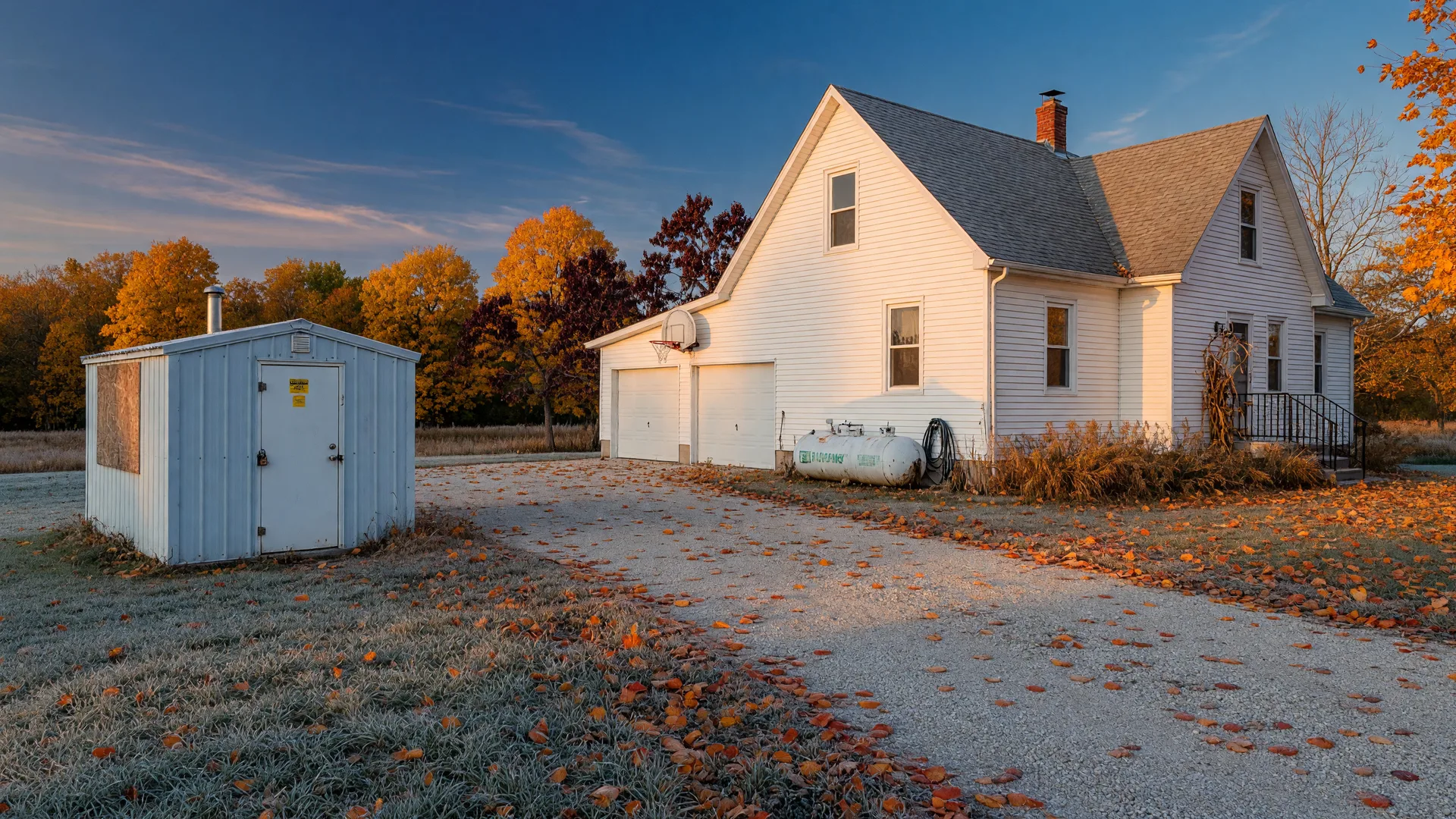
The average first frost for the Grand Blanc area lands in mid-October, and for country homes in Columbiaville, Tyrone Township, Fenton Township, and rural Linden that date matters more than for almost any other property. Homes that run on private wells, septic systems, propane, and generators have October homework that municipal properties never touch: pump the septic before the ground freezes, protect exposed well piping, schedule the fuel fill, and test the generator before the first heavy snow. Here is what to check this month, what buyers should verify in their due diligence, and what sellers should document before listing.
Know Your Local First Frost Date
In the southern part of the state, average first-frost dates run from about October 1 in the coldest pockets to mid-October around Grand Blanc, Fenton, and Linden, with lake-adjacent lots often gaining a week or more of buffer because the water holds warmth. The practical takeaway is the same everywhere: October is the month to prepare, because once the ground freezes, septic service, well work, and generator repairs all get harder and pricier. Our winterization guide covers the furnace, gutters, and pipes every Michigan home needs, and this guide builds on it with the country-home systems specific to township properties.
The Private Well: What Cold Weather Changes
Most parcels in Columbiaville and Tyrone Township, and many in Fenton and Linden Townships, draw water from a private well instead of a municipal system. Submersible pumps hang below the frost line and rarely freeze, but above-ground jet pumps and exposed piping absolutely can, so Michigan well drillers recommend insulating exposed pipes with foam sleeves or heat tape and sealing any gap where cold air reaches them. Check the well pit, exterior water meter, and any unheated pump house for drafts, keep the area around the wellhead clear so meltwater drains away from the casing, and during the coldest stretches keep one faucet dripping slowly to keep water moving.
If you own a seasonal cottage that gets closed for winter, shut off and drain the system, then pour non-toxic propylene glycol (RV antifreeze) into toilets, traps, and sink drains so leftover water cannot burst the fittings. Buyers considering rural parcels should ask for a well water quality test, typically covering bacteria and nitrates, as part of their offer, and confirm the well's output holds up in a dry fall. Our Columbiaville and Tyrone Township guide notes that rural parcels in these areas often involve well and septic systems, so plan for the extra inspections and budgeting that come with them.
The Septic System: Pump Before the Ground Freezes
The single most important October task for a rural home is septic service. If the tank has not been pumped in three to five years, schedule it now: a tank left with heavy solids going into winter is far more likely to clog the drain field, and spring thaws only make a backup messier and costlier. Use the service visit to have the tank inspected for leaks, check the risers and lid, and confirm no tree roots are crowding the lines.
Between service calls, protect the system the cheap way: keep normal household water flowing, do not park vehicles or drive equipment over the drain field (compacted snow loses its insulating value, and heavy loads can crush buried components), and let snow pile up naturally over the tank as insulation rather than clearing that area. A few local companies handle this work, including Ockerman Groundwork Concrete & Septic in Grand Blanc, Root-A-Way Drain Cleaning in Flint, and Diem Septic Tank Installers in Flint. Buyers should know that many Michigan townships require an inspection and certification of the septic system before a home transfers, and lenders routinely ask for well and septic documentation on rural property files.
Propane, Fuel, and the Schedule That Matters
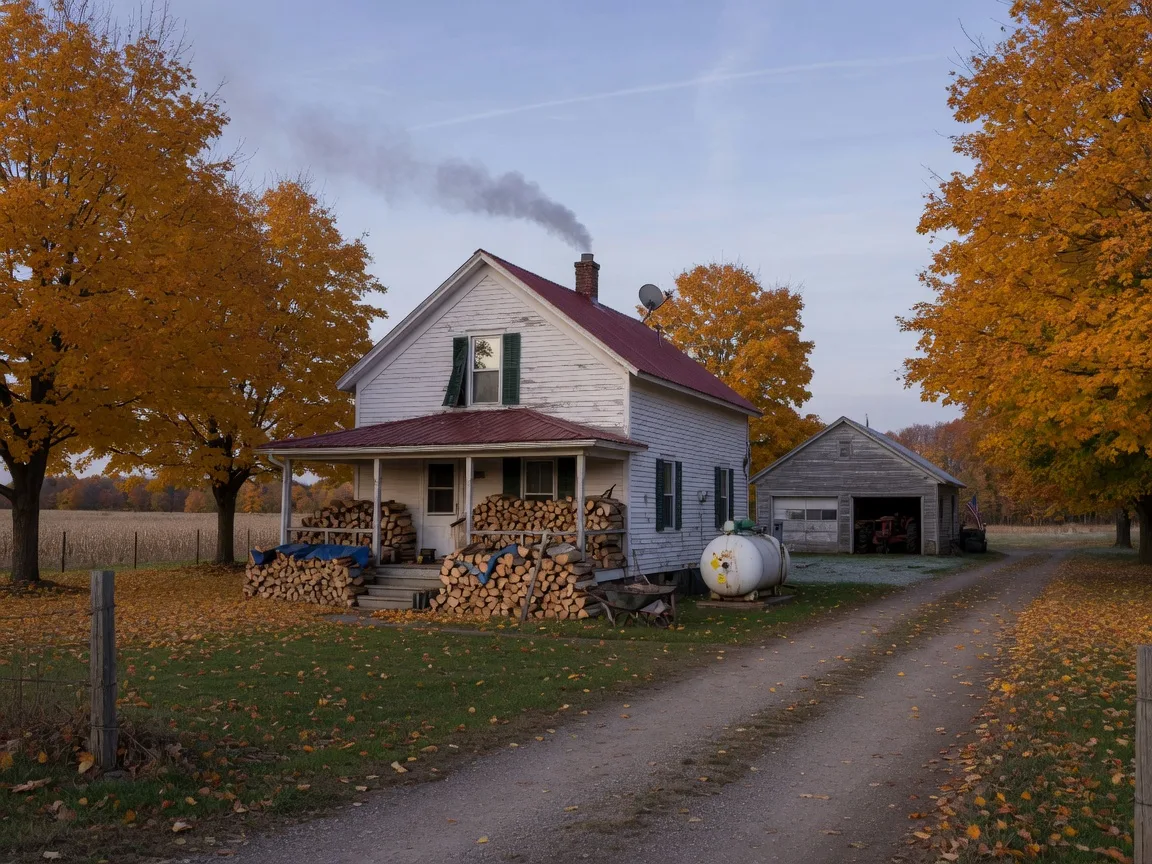
Homes on propane should schedule their fill before the first heavy snow, not after. Delivery trucks struggle on unplowed drives, winter weather can delay routes for days, and a long rural approach in Tyrone Township or northern Columbiaville simply takes more time to reach. Check the tank gauge monthly through the winter, keep the fill port clear of snow and drifts, and mark the tank location so a fresh plow driver does not bury it. If you heat with fuel oil, the same logic applies: order the fill while the drive is still bare.
The Generator: Test It Now, Not in January
Outages in lake country and on township acreage can run longer than city outages because crews service dense neighborhoods first. That is why standby generators are so common around Lake Fenton, Lobdell Lake, and the Holloway Reservoir. Whether yours is portable or permanently installed, October is the month to test it under load: run the unit for 30 to 60 minutes with the transfer switch engaged, change the oil to a winter-grade weight, verify the battery and charger, and confirm the propane or natural gas supply pressure. For portable units, add fuel stabilizer or use non-ethanol gas, and empty or treat the carburetor before long storage so it starts when you need it.
Driveways, Plow Contracts, and Long Rural Approaches
Plow contractors build their route books in October, so sign up before the first snow, especially if you are new to the area or just closed on a township home. Set snow markers along the edges of long or curved drives so the plow blade stays on gravel, keep the mailbox area clear, and make sure the propane fill port and generator exhaust are never buried. If the home has steps, ramps, or an outdoor staircase, test heat tape and de-icers now, while hardware stores still have stock.
Boats, RVs, and Seasonal Lake Houses
Country homes often come with toys, and October is when they go to bed for the season. Boats on the Southern Lakes should be winterized, drained, and shrink-wrapped or stored before the water turns hard, with the battery pulled and the drive unit serviced. Local options in the Fenton lake country include All Lakes Marine Storage, SkipperBud's Lake Fenton, and Lake Ponemah Marina. Seasonal cottages get the same treatment as the well section above, plus rodent-proofing the crawlspace, securing docks and boat lifts, and draining outdoor spigots. Our Southern Lakes living guide is a good starting point for what lake ownership involves year round.
The Buyer's Angle: October Is Due-Diligence Season
Fall is the honest season to inspect a rural home: you see how it behaves in cold rain, whether the gutters hold up under leaves, how the well performs when the ground is dry, and whether the septic system was actually maintained. In due diligence, buyers of well-and-septic properties should order a well water test, a septic pump and inspection (commonly a few hundred dollars in total), a furnace or boiler service history, and a generator test if one is included in the sale. Ask whether the township where the home sits requires septic certification at transfer, and make well and septic approvals a written contingency in your offer. Columbiaville, Tyrone Township, and the township corridors around Fenton and Linden reward this preparation, because the homes that come with documented, working systems are the ones that appraise and close cleanly.
The Seller's Angle: Documented Systems Sell
For sellers, October is prime listing season before the holidays, and the best way to stand out in a rural market is paperwork. Have the septic pump receipt from the past three to five years, the well water test within the last year, and the generator and furnace service records ready before the listing photos are taken. Buyers pay a premium for verified systems, and a file folder of maintenance history turns a potential objection into a confirmation. If your property has not been serviced recently, doing it now, before listing, protects both your price and your closing date.
Where the Market Sits This October
Context helps the prep make sense. The 30-year fixed rate averaged 7.28 percent for the week ending October 1, 2026 per Freddie Mac, so serious rural buyers are locking terms now rather than waiting. Regionally, Grand Blanc sits near a $324,900 median list with roughly 331 active listings per Movoto's September snapshot, Fenton's 48430 median sale runs near $406,000 per Redfin, Linden's city-level median sale is near $320,000, and Columbiaville's average home value is near $262,642 per Zillow, up about 6.6 percent year over year. In Tyrone Township, the market leans toward new construction and acreage, with custom homes such as those at Oaks of Tyrone starting around $629,900. See our first-week-of-October market update for the full breakdown, and the monthly market stats page for dated, sourced figures.
Getting ready for a Michigan winter, or a winter-ready home?
Call Rob Moen directly at (810) 691-0019 for a no-obligation conversation about rural properties in Columbiaville, Tyrone Township, Fenton Township, and Linden. Whether you are buying your first acreage home or selling one, we will help you understand the systems, the season, and the market.
Explore Homes for the Season
To see what is currently available across Columbiaville, Tyrone Township, Fenton Township, Linden, and Grand Blanc, visit our featured homes page for a curated selection of active listings, or compare lifestyle details in our Columbiaville, Grand Blanc, and Linden community guides.
Why Work with Rob Moen and The Moen Group?
With more than three decades of experience and thousands of transactions across Genesee, Livingston, and Lapeer counties, Rob Moen brings deep market knowledge and sharp negotiation to every client. As Principal Broker of Keller Williams First and a past President of the East Central Association of Realtors, he helps buyers evaluate rural systems, compare communities, and act with confidence in every season.
Ready to find a home that is built for Michigan winters? Contact Rob Moen at (810) 691-0019 or send a message online. Your next home is waiting.

The Moen Group, Inc. is committed to the Code of Ethics and the principles of fair housing and equal opportunity. All properties and neighborhoods described in this article are available for sale or rent to all persons regardless of race, color, religion, sex, handicap, familial status, national origin, or any other protected class. We encourage and support equal opportunity in housing.
Related Resources

Rob Moen
With more than three decades of experience and thousands of successful home sales across Genesee, Livingston, and Lapeer counties, Principal Broker Rob Moen brings deep market knowledge, sharp negotiation skills, and a hands-on approach to every transaction. As a past President of the East Central Association of Realtors and the Women's Council of REALTORS, Rob is committed to helping buyers and sellers in Grand Blanc, Fenton, Linden, Columbiaville, Tyrone Township, and surrounding communities achieve outstanding results.